Investment Cost Analysis of Self-loading Concrete Mixers in Multi-site Construction Modes
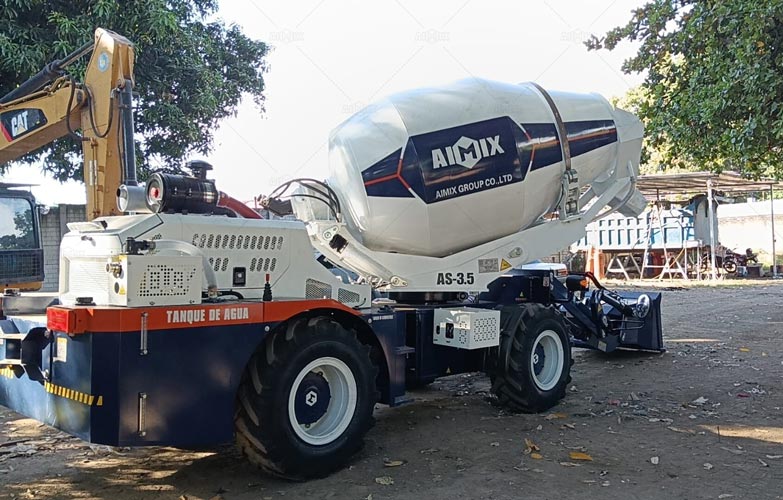
In today’s construction industry, multi-site operations have become increasingly common, especially across Latin America where projects are often dispersed across remote and urban areas simultaneously. This shift has placed greater emphasis on flexible and cost-efficient equipment. Among the available solutions, the self-loading concrete mixer stands out for its ability to combine batching, mixing, and transportation into a single unit.
However, when contractors evaluate the self-loading concrete mixer price(autohormigonera precio), especially in markets like self-loading concrete mixer price Chile or self-loading concrete mixer Bolivia price, the focus should go beyond initial purchase cost. A comprehensive investment analysis must consider how the machine performs across multiple job sites and how it impacts total project expenditure over time.
Understanding Cost Structure Beyond Purchase Price
Initial Investment vs Total Cost Of Ownership
The upfront self-loading concrete mixer price is only one component of the overall investment. In multi-site construction modes, equipment utilization and mobility directly influence cost efficiency.
A typical cost structure includes:
- Equipment purchase or financing cost
- Transportation between sites
- Fuel consumption and operation
- Maintenance and spare parts
- Labor requirements
For example, while the self-loading concrete mixer price Chile(autohormigonera precio Chile) may appear higher due to import costs or configuration differences, its ability to serve multiple sites can significantly dilute the cost per project.
Impact Of Multi-site Deployment
Unlike stationary batching plants, self-loading mixers are designed for mobility. This becomes a key advantage in multi-site scenarios where frequent relocation is required.
Instead of investing in multiple fixed installations, contractors can rely on a single machine to support several projects. This reduces redundant capital expenditure and improves equipment utilization rates.
Cost Advantages In Multi-site Construction Modes
Reduced Infrastructure Investment
In traditional setups, each site may require its own batching system, material storage, and labor setup. This leads to duplicated investment.
With a self-loading concrete mixer, much of this infrastructure becomes unnecessary. The machine operates independently, which means contractors can:
- eliminate the need for temporary batching plants
- reduce site preparation costs
- minimize auxiliary equipment requirements
This is particularly valuable when comparing the self-loading concrete mixer Bolivia price against the cost of deploying multiple small batching units.
Lower Transportation And Logistics Costs
Transporting raw materials and finished concrete between sites can be expensive and time-consuming. A self-loading mixer minimizes these logistics challenges by producing concrete directly at the point of use.
In countries with complex terrain such as Chile, where project locations can be geographically dispersed, optimizing logistics plays a critical role. Even if the self-loading concrete mixer price Chile is relatively higher, the savings in transportation often justify the investment.
Labor Optimization Across Sites
Multi-site operations typically require separate teams for each location. By using a self-loading concrete mixer, contractors can reduce labor dependency since one machine can be operated by a small, trained team.
This leads to:
- lower labor costs per site
- simplified workforce management
- reduced training requirements
Over time, these savings contribute significantly to offsetting the initial self-loading concrete mixer price.
Key Factors Affecting ROI
Equipment Utilization Rate
The return on investment largely depends on how frequently the machine is used. In multi-site construction modes, higher utilization directly translates into better cost efficiency.
If a machine is continuously deployed across different projects, the effective cost per cubic meter of concrete decreases substantially.
Site Conditions And Accessibility
Terrain and access conditions influence both operational efficiency and maintenance costs. In mountainous or remote areas, the value of a mobile solution becomes more evident.
For contractors evaluating the self-loading concrete mixer Bolivia price(auto hormigonera Bolivia precio), it is important to consider how well the equipment adapts to local conditions. Machines that perform reliably in difficult environments generate better long-term returns.
Configuration And Capacity Selection
Different models come with varying drum capacities, engine power, and automation features. Selecting the right configuration ensures that the machine matches project demands without unnecessary overspending.
Over-specifying equipment can increase the initial self-loading concrete mixer price without delivering proportional benefits, while under-specifying may limit productivity.
Practical Cost Comparison Scenario
Consider a contractor managing three small to medium-sized projects simultaneously. Without a mobile solution, each site would require separate batching equipment, labor, and logistics coordination.
By investing in one self-loading concrete mixer, the contractor can rotate the machine between sites based on project schedules. Although the upfront self-loading concrete mixer price Chile or self-loading concrete mixer Bolivia price may seem significant, the combined savings in infrastructure, labor, and logistics can result in a lower total project cost.
This approach also improves cash flow efficiency, as capital is concentrated in a single high-utilization asset rather than spread across multiple underutilized systems.
A Smarter Investment Approach For Multi-site Projects
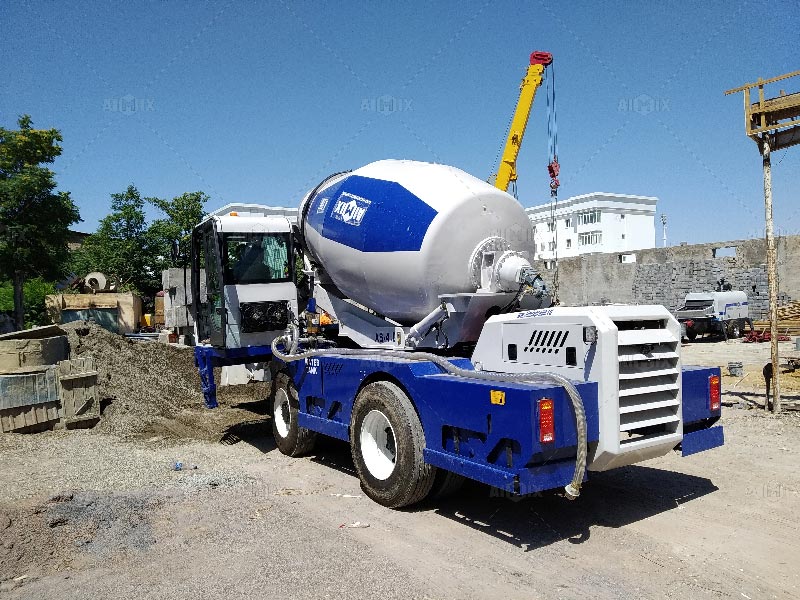
When analyzing the self-loading concrete mixer price, contractors should adopt a lifecycle perspective rather than focusing solely on initial cost. In multi-site construction modes, mobility, flexibility, and utilization efficiency are the key drivers of profitability.
For markets like Chile and Bolivia, where project conditions vary widely, investing in a self-loading concrete mixer is not just a purchasing decision—it is a strategic move toward optimizing resource allocation and improving operational efficiency.
By aligning equipment selection with project distribution and workload intensity, contractors can achieve a more predictable cost structure, stronger ROI, and greater competitiveness in the construction market.